Why Bad Bunny’s Super Bowl 60 Halftime Was a Visual Fiesta
Discover Why Bad Bunny’s Super Bowl 60 Halftime Was a Visual Fiesta, breaking down Bad Bunny’s Super Bowl Performance, surprise moments with Lady Gaga and Ricky Martin, cultural symbolism, and what viewers thought in the best half time show reviews of Half Time Show Super Bowl 2026.
OTHER SPORTS
Bad Bunny’s Super Bowl 2026 — A Historic Spanish Moment
Bad Bunny’s Super Bowl 2026 performance became the first primarily Spanish halftime show in NFL history, according to The New York Times.
Unlike previous bilingual sets by Shakira and Jennifer Lopez in 2020, Bad Bunny went full Spanish.
This wasn’t “translation for America.”
This was America listening to Puerto Rico.
That shift mattered culturally, politically, and musically.
Opening Scene: “Tití Me Preguntó” — A Cinematic Walk
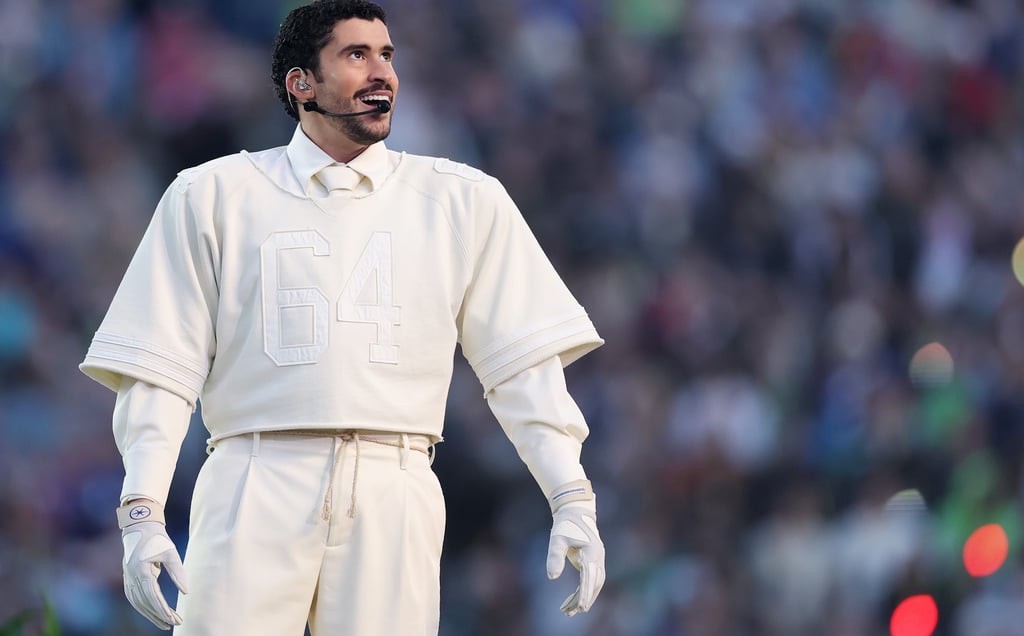
The show opened with “Tití Me Preguntó”.
Bad Bunny moved through tall grass like a traveler returning home, passing everyday life scenes that felt intimate and familiar.
The camera didn’t zoom aggressively — it followed him gently, like a documentary.
It felt real, not manufactured.
Lady gaga Bad Bunny’s — A Surprise Duet That Stole Hearts
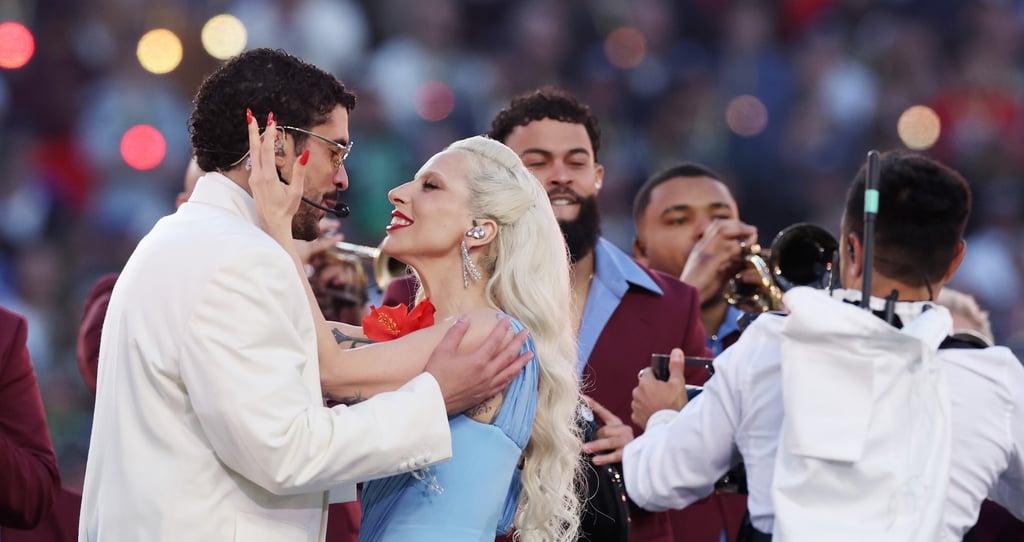
Midway through the show, Lady gaga Bad Bunny’s collaboration shocked the stadium.
Lady Gaga appeared and sang “Die With a Smile”, then danced with Benito in a warm, unscripted moment.
This wasn’t a flashy cameo — it felt emotional, respectful, and playful.
Their chemistry symbolized two global artists from different worlds meeting on a shared stage of art.
Celebrating Debí Tirar Más Fotos — Album of the Year Energy
Bad Bunny centered much of the set around his Grammy-winning album Debí Tirar Más Fotos, which had just won Album of the Year at the 2026 Grammys.
Songs performed included:
“Yo Perreo Sola”
“NUEVAYoL” — a tribute to the Puerto Rican diaspora in New York
“EoO”
“Debí Tirar Más Fotos”
“DtMF” — which ended in a massive singalong
Each track felt like a chapter in Puerto Rico’s story.
Ricky Martin Super Bowl — A Legendary Passing of the Torch
Then came a true Puerto Rican legend.
Ricky Martin Super Bowl moment arrived when Ricky Martin joined Bad Bunny to perform “LO QUE LE PASÓ A HAWAii.”
It felt like history meeting today.
Two generations. One island. One stage.
The crowd went wild.
Symbolism: The Electric Pole Climb
Toward the end of the show, Bad Bunny climbed an electrical pole.
This wasn’t random.
Puerto Rico has faced devastating power outages after Hurricane Maria.
The climb symbolized:
Struggle
Survival
Resistance
Resilience
It turned halftime into art with meaning.
A Grammy Passed to the Next Generation
In one of the most emotional moments, Bad Bunny handed one of his Grammy Awards to a young Puerto Rican child.
This wasn’t a stunt.
It was a message:
“Your future matters.”
Inclusivity: Puerto Rican Sign Language on Stage
The show was interpreted in Puerto Rican Sign Language, which researchers consider endangered.
This made the performance more inclusive than almost any previous halftime show — a rare and beautiful choice.
How many people watch the half time show?
Historically, the Super Bowl halftime show attracts between 120–130 million viewers worldwide, according to Nielsen.
That means Bad Bunny’s Super Bowl 60 halftime reached one of the largest audiences in television history — giving Puerto Rican culture a global spotlight.
Bad Bunny’s Super Bowl Performance — Step-by-Step Breakdown
Here’s why Bad Bunny’s Super Bowl Performance worked so perfectly:
Step 1 — Authenticity
He stayed true to Puerto Rico.
Step 2 — Storytelling
He built a visual narrative, not just a playlist.
Step 3 — Culture First
Every prop, dancer, and image came from real life.
Step 4 — Star Power
Cameos added excitement without stealing focus.
Step 5 — Emotion
The electric pole and Grammy moment hit hard.
Step 6 — Celebration
Despite serious themes, the mood was joyful — a true fiesta.
Half Time Show Super Bowl 2026 — Why This One Stands Out
The Half Time Show Super Bowl 2026 will be remembered not for pyrotechnics — but for purpose.
While past shows leaned heavily on spectacle, this one leaned on identity, heritage, and meaning.
That makes it culturally significant, not just entertaining.
Half time performance 2026 — Crowd and Online Reaction
The Half time performance 2026 exploded across social media.
Fans praised:
Representation
Creativity
Cultural pride
Music selection
Visual storytelling
Critics noted that this was one of the most artistically serious halftime shows ever staged.
Lady gaga half time show 2026 — Why Her Appearance Worked
Unlike many guest appearances, the Lady gaga half time show 2026 moment didn’t feel forced.
She blended into the vibe rather than dominating it — which is rare for such a huge star.
Her presence added emotion without distraction.
half time show reviews — What Critics Said
Early half time show reviews from major outlets like Rolling Stone, Billboard, and Variety praised:
Cultural depth
Visual creativity
Authenticity
Emotional impact
Many called it “one of the most meaningful halftime shows in NFL history.”
Bad Bunny’s Own Words — Why This Matters
Before the game, Bad Bunny said:
“I wasn’t chasing Album of the Year or the Super Bowl. I was trying to connect with my roots, my people, and myself.”
You could feel that honesty in every second.
Global Impact: More Than Music
With:
6 Grammys
17 Latin Grammys
Billions of streams
Roles in films like Bullet Train and Happy Gilmore 2
Bad Bunny is now a global cultural ambassador for Latin music.
A Halftime for the History Books
In the end, this wasn’t just entertainment.
This was culture on the biggest stage in the world.
That’s why Why Bad Bunny’s Super Bowl 60 Halftime Was a Visual Fiesta will be talked about for years — not weeks.
Stay connected with SportInsiderly for trusted updates, expert insight, and in-depth coverage of the stories that truly matter in world sports.
Recommended Stories:
Night of the Stars: Every Major Winner from the 2026 NFL Honors
2026 Winter Olympics Live: Full Schedule, TV Info & How to Watch the Milan‑Cortina Games
Inside Cooper’s Bold Cuban-Inspired Outfit at the 2026 Stadium Series
Top 5 World’s Highest Paid Athletes in 2026 (Global Earnings Ranking)
Why Bad Bunny’s Super Bowl 60 Halftime Was a Visual Fiesta — A Cultural Spectacle the World Won’t Forget
The Super Bowl 60 halftime stage at Levi’s Stadium in Santa Clara, California, didn’t look like a football field — it looked like Puerto Rico came to life.
When Bad Bunny stepped onto the grass, millions of viewers didn’t just watch a concert. They walked — emotionally — through a Puerto Rican neighborhood filled with palm trees, street vendors, music, memory, pride, protest, and pure joy.
This wasn’t fireworks-and-lasers halftime. This was culture. This was identity. This was history.
And that is exactly why Bad Bunny’s Super Bowl 60 Halftime Was a Visual Fiesta.
Bad Bunny’s Half Time Show — More Than Music, a Living Story
Most halftime shows feel like performances. Bad Bunny’s Half Time Show felt like a movie.
Directed by legendary live-show director Hamish Hamilton, the stage was transformed into a miniature Puerto Rico featuring:
🌴 Real palm trees
🥥 Coconut vendors
🍧 Piragua carts
🎲 Domino tables
🥊 Boxers shadowboxing
💅 Women getting their nails done
Instead of dancers marching in formation, Bad Bunny walked naturally through this world, greeting people, moving casually, and making the viewer feel like a neighbor — not a spectator.
That human touch made the show unforgettable.
Contact
Have a question, suggestion, or partnership inquiry?
Email:
info@sportinsiderly.com
© 2025. All rights reserved.
🌐 Follow us on social media for daily updates.